No products in the cart.
Return To Shop
Enjoy volume discounts
See
Free shipping on any of our orders

Differences between kraft paper bags and cellulose bags


The rise of sustainable packaging has brought with it a wide variety of options to replace single-use plastic. Among them, paper bags have gained prominence for being practical, recyclable and environmentally friendly.
However, within the world of paper there are different variants, and one of the most common comparisons is the one that takes place between the kraft paper bags and the white cellulose bags. Although at first glance they may seem similar, the truth is that there are important differences between the two that should be known before making a choice.
This article will help you distinguish them clearly and decide which one best suits your brand.
What is kraft paper?
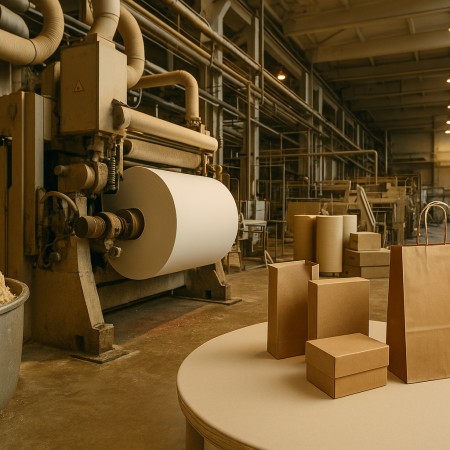
Kraft paper is manufactured from unbleached cellulose fibers obtained through the kraft process. This treatment preserves the natural strength of the wood, resulting in a robust paper with a rough texture and characteristic light brown color.
This type of paper is ideal for bags that must support weight or a more demanding use. It is very common in food stores, bakeries, organic establishments and artisan businesses. In addition, its aesthetics transmit authenticity, sustainability and closeness.
What about white cellulose paper?
White cellulose is also obtained from vegetable fibers, but undergoes a bleaching process -usually free of elemental chlorine- that results in a lighter, thinner and softer paper.
This paper is widely used in sectors where the visual image plays a leading role: pharmacies, cosmetics stores, clothing, corporate events or brands that want to project a cleaner and more neutral aesthetic.
Key differences between the two types of bags
Here is a clear comparison between the two options:
1. Color and finish
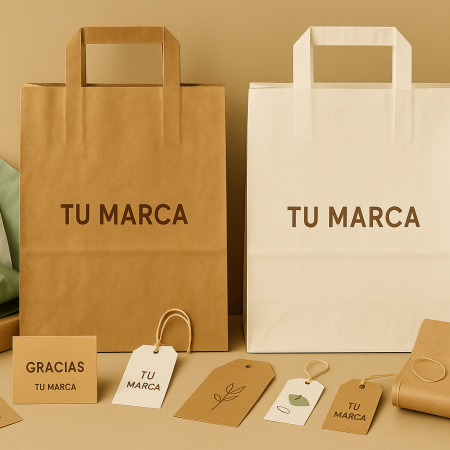
Kraft bags retain their natural brown color, which makes them perfect for conveying an ecological and artisanal message.
White cellulose bags, on the other hand, offer a clean and uniform finish, more suitable for a sober and elegant aesthetic.
2. Texture
Kraft paper has a slightly rough surface, with a more rustic and natural look.
White cellulose is finer and softer, which gives a sense of order and visual care.
3. Resistance
Kraft is more resistant to traction and weight, ideal for bulky or heavy products.
White paper, although firm, is intended for lighter loads and less demanding uses.
4. Brand perception
Kraft conveys closeness, environmental commitment and authenticity.
White cellulose projects cleanliness, minimalism and professionalism.
5. Customization and printing
Both papers are suitable for printing techniques such as flexography or screen printing.
In kraft, colors are integrated with a softer and more natural finish.
On white paper, designs stand out more due to contrast, making it ideal for sharp logos or visually strong messages.
Which option to choose for your business?
It depends on the type of experience you want to offer:
- If you prioritize resistance, ecological image or a handcrafted look: choose kraft.
- If you are looking for visual elegance, cleanliness and a more neutral finish: opt for white cellulose.
The type of product you sell, your target audience and the sales channel (physical or digital) also play a role. Both options are valid, sustainable and customizable.
Conclusion
Both kraft paper bags and white cellulose bags have a lot to offer. The important thing is that your choice is not only practical, but also consistent with your brand identity and the values you want to convey.
Investing in the right kind of stock market is also investing in how your customers perceive you.





 English
  Spanish