No products in the cart.
Return To Shop
Enjoy volume discounts
See
Free shipping on any of our orders

Sustainable colors: trends in environmentally friendly printing inks

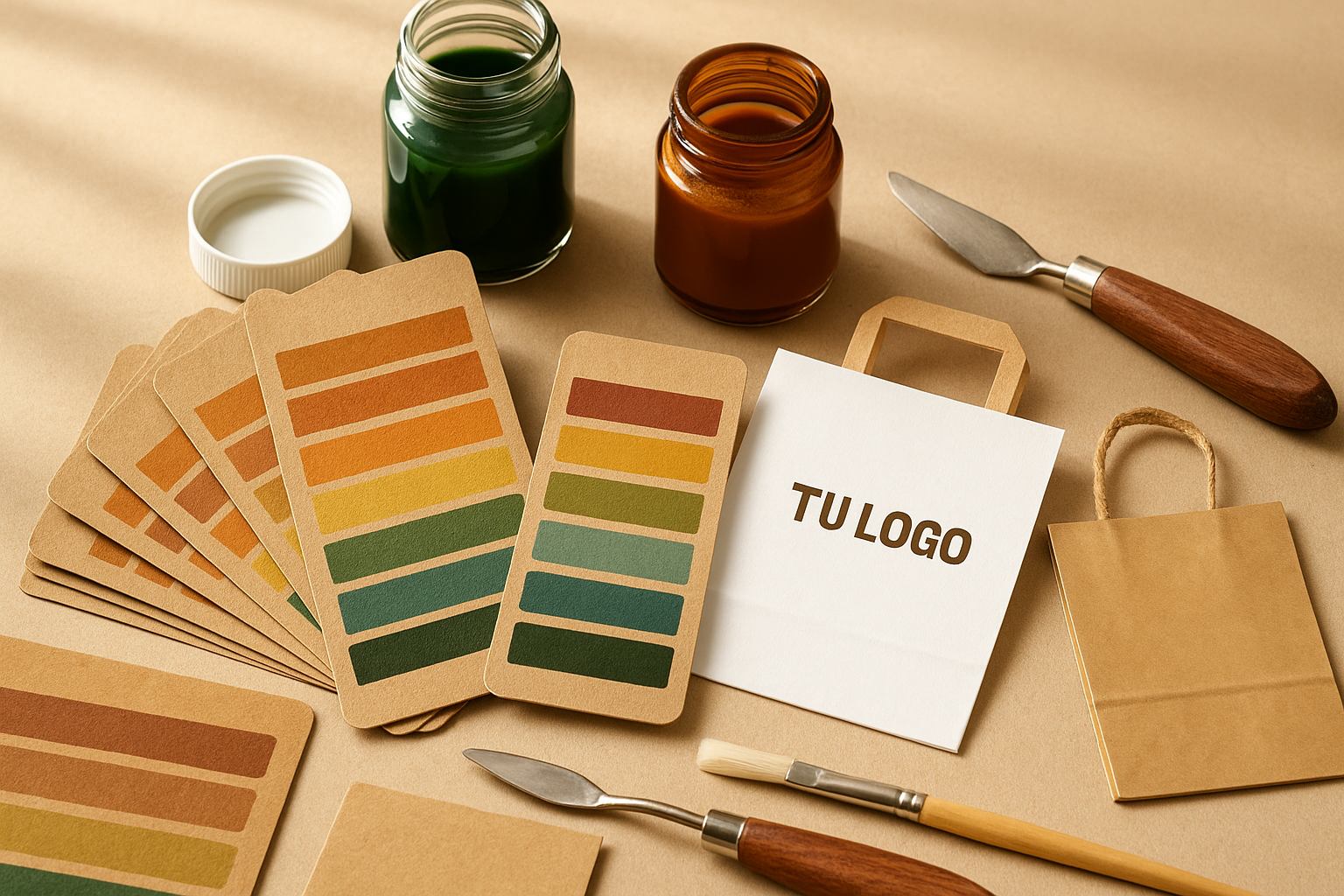
When designing custom paper bags, it is not only the type of paper or the format that matters. The ink you use also speaks of your values.. More and more brands are opting for environmentally friendly printing solutions that are safe for the environment, comply with regulations and maintain good visual quality.
In this article we tell you what types of ecological inks exist, what benefits they offer and what are the current trends for printing responsibly without sacrificing design.
What makes an ink environmentally friendly?
An environmentally friendly ink is one that minimizes its environmental impact during production, application and disposal. To be considered sustainable, it must meet certain requirements:
Be free of heavy metals or toxic compounds.
Vegetable-based or water-based.
Do not release harmful volatile organic compounds (VOCs).
Enable efficient drying with low energy consumption.
In addition, many of these inks are compatible with recycled or compostable papers, which completes the product's sustainability cycle.
Most commonly used types of ecological inks
💧Water-based inks
They are the most common in ecological printing. They are composed mainly of water, pigments and non-toxic additives. They offer good coverage, fast drying and are suitable for flexographic and screen printing.
Advantages:
Low toxicity
Easy cleaning of machinery
Good strength and stability on kraft or cellulose paper
🌿 Vegetable inks
Made from natural oils such as soybean, linseed or corn. They have a high percentage of renewable components and are biodegradable.
Advantages:
Increased color yield
Reduced waste generation
Highly valued in environmentally certified brands
♻️ Solvent-free UV inks
These inks are dried by ultraviolet light, without the need for heat or solvents. Although they are not 100 % natural %, they significantly reduce the emission of harmful compounds.
Advantages:
Excellent fixation in large-scale printing
Reduction of in-process emissions
Good performance on difficult substrates
What colors are used in green printing?
The current trends in sustainable personalized bags focus on natural and sophisticated palettessuch as:
Organic greens (moss, forest, olive)
Browns and kraft tones (sand, chocolate, terracotta)
Atlantic blues, stone grays or clayey soils
Pure blacks and whites with matte finish
These colors not only reinforce the natural aesthetics of the paper, but also convey coherence with the ecological values represented by the brand.
Sustainability does not end on paper. Choose responsible inks and consistent colors is part of the commitment to cleaner, more transparent and respectful packaging.
Investing in green printing is not just a technical issue: it's a statement of principle. And your customers will read it, even before they open the bag.


 English
  Spanish